May 2019: Stirring The Devil’s Porridge

At the May meeting of the Stewartry U3A, John Anstey from the Devil’s Porridge Museum, Eastriggs, told members about what was described at the time of the First World War as the ” greatest factory on Earth”.

In early 1915 British solders were in desperate need of a reliable supply of ammunition. The Government appointed a Minister of Munitions, Lloyd George, to be responsible for increasing production of ammunition. It was decided to build an enormous factory stretching over some nine miles to the east of Annan, from Dornock to Gretna. Over 100,000 Irish navvies were recruited to build the factory and the townships of Eastriggs and Gretna, modelled on the lines of garden towns, to house the workers who came from all over the country. The townships had churches, cinemas, libraries and sporting facilities with a range of houses from those for the management to hostels for the many single women who worked in the factory. Twenty thousand people were recruited, with 8,000 being experienced professionals.

The factory’s main purpose was the production of cordite colloquially known as the “devil’s porridge”. As part of the process a highly explosive mix of gun cotton and nitro glycerine was kneaded by hand and as a result of the working conditions the women were exposed to the mix and acid splashes which turned their skin yellow and they became known as “yellow canaries”. The factory rapidly doubled the country’s production of cordite.

Following the Armistice the Government had hoped that the factory would continue as a chemical manufacturing facility but this did not work out, much of the equipment was sold off and the factory demolished in 1919-1920.

The next meeting of the Stewartry U3A will be held on Tuesday 24 September at 2.00pm in the Parish Church, Castle Douglas, when Gordon Cowan will give a talk on Alexander Murray – from shepherd’s son to linguistic expert.
April 2019: Unusual aspects of the life of a politician

John Corrie gave a wonderful insight into his life as a politician at the April meeting of the Stewartry U3A.

He was first encouraged to stand for parliament by Sir Alex Douglas Home and contested the North Lanarkshire constituency in 1964; he served as Conservative Member of Parliament for Bute and North Ayrshire from 1974 to 1983 and for Cunninghame North from 1983 to 1987. He had a dual mandate as a MEP from 1974 to 1979 and was later elected as a Conservative Member of European Parliament for Worcestershire and South Warwickshire from 1994 to1999 and then for West Midlands from 1999 to 2004.

John said that he enjoyed being a MEP much more than sitting on the back benches in Westminster where members are expected to follow the line. During his time in the European Parliament he was involved in putting some 130 bills through that Parliament.

While an MEP his main interest was foreign affairs and development aid. He described the work of the committees on which he had served and the developing countries which he had visited. He is now a member of the Association of European Parliamentarians with Africa Governing Council.

March 2019: Renovating a listed building in The Stewartry

Craig Fabian gave a fascinating illustrated presentation on the renovation of 27 and 29 High Street, Kirkcudbright to the March meeting of the Stewartry U3A. His sympathetic and painstaking renovation of the interior and exterior of the building was evident from the “before and after” photographs and those taken during the building work.

The earliest part of the building dates from the 16th century; it was partially demolished in 1755 and then split into two houses, 27 and 29 High Street, in 1848. The Hornel Trust modernised it in 1937 and a rear lean- to added in 1970.

Alison and Craig bought 27 High Street in 2000, despite being told things like “it is terrible house” “are you prepared to replace the roof” and so on. In 2001 they were able to acquire 29 High Street and initially carried out only essential and minimal repairs while they sought expert advice on renovation of the building, bringing it back to a single house. With the architect they agreed to do as little as possible in order to preserve the character of the building, striking a balance between conservation, restoration and modernisation. Advice was sought from National Trust for Scotland, Historic Environment Scotland, Society for the Protection of Ancient Buildings and the local authority. As it is a “B” listed building and in a conservation area there were additional requirements to be met.

Distinct from modern buildings, it was essential to ensure that there was air movement throughout the building and that appropriate materials were used such as lime mortar and not cement which traps moisture within a structure. Craig said that their objective was to renovate the building broadly to a mid -18th century design, fitting in with the local built environment and contributing to the Artists Town while also creating a comfortable family home.

On the exterior, tradition lime harling was applied, the chimney which had been removed was replaced and the roof was re-slated with slates being graded in traditional pattern. 40% of the existing slates were re-used. The skew stones were conserved, the dormer windows were restored and earlier windows opened up. The front door was retained after some repairs.

Inside, the Victorian staircase was removed as well as room divisions. This work exposed a much earlier wooden panel division which was conserved. The floors required to be strengthened; walls and ceilings were finished with traditional lath and plaster and the doors were finished with copied mouldings.

In conclusion, Craig said that it had been essential to thoroughly research the renovation of a building of this age, to consider how 27 and 29 High Street should be renovated in the context of the High Street and the town and to obtain expert advice.

February 2019: The Fishermen’s Mission

The Fishermen’s Mission was the subject of the talk given by Marion Dixon at the February meeting of the Stewartry U3A held in the Parish Church, Castle Douglas.

The Fishermen’s Mission, formerly known as the Royal National Mission to Deep Sea Fishermen, is a charitable organisation which provides financial, pastoral and spiritual support to fishermen and their families. The Mission also provides an emergency response service and Marion described the support which she had organised when a fishing boat foundered on the rocks in the Kirkcudbright estuary.

As the Kirkcudbright Port Officer for the Fishermen’s Mission, Marion is down at the harbour most days. She described the help and support which she is able to provide including for fishermen who may be away from home. While there are Mission Centres around the country there are no such facilities for fishermen in Kirkcudbright.

The Fishermen’s Mission does not receive any Government funding or Lottery support and is dependent entirely on charitable giving, legacies and grants. For every £1 raised, 88p is spent on the Mission’s services. In 2017 the Mission made grants to some 2,400 beneficiaries totalling almost £898,000.


January 2019: Dumfries and Galloway Blood Bikes

At the January meeting of the Stewartry U3A, David Hook, Chairman of the Dumfries and Galloway Blood Bikes, gave a talk about how the charity had developed from its establishment in 2015 to the present day. David, a retired police officer, was involved initially in setting up a blood bikes group in Cumbria from which Dumfries and Galloway Blood Bikes was devolved in February 2015 with the aim of transporting blood samples and other medical supplies between hospitals and from hospitals to laboratories, 24 hours a day, 365 days a year.

Dumfries and Galloway Blood Bikes

The service is provided free of charge to NHS and is able to provide a much more efficient and reliable service than the previous arrangement of NHS relying on taxis or couriers. Often time is of the essence in ensuring that samples reach laboratories within a 2 hour limit which in turn means a quicker response for patients and in many cases making a significant impact on the treatment of patients.

From the initial 4 or 5 riders the group now has 45 riders with 11 bikes owned by the charity as well as four 4×4 vehicles. The 30 controllers operate from home and as a minimum one controller and two riders are on shift at any one time. In 2018, 1030 runs were made mainly within Scotland but on occasions samples are taken as far south to a laboratory in Coventry, if necessary linking in with other blood bike groups.

Dumfries and Galloway Blood bikes has a team of fund raisers and give frequent talks throughout the area to explain the service provided as well as emphasising that they are not part of the NHS but that they provide an essential service.

Last year the group received the highest award for a charity – The Queen’s Award for Voluntary Service in recognition of its work.

You can donate at Dumfries and Galloway Blood Bikes Just Giving.

November 2018: Celebrating 10 years of The Stewartry U3A

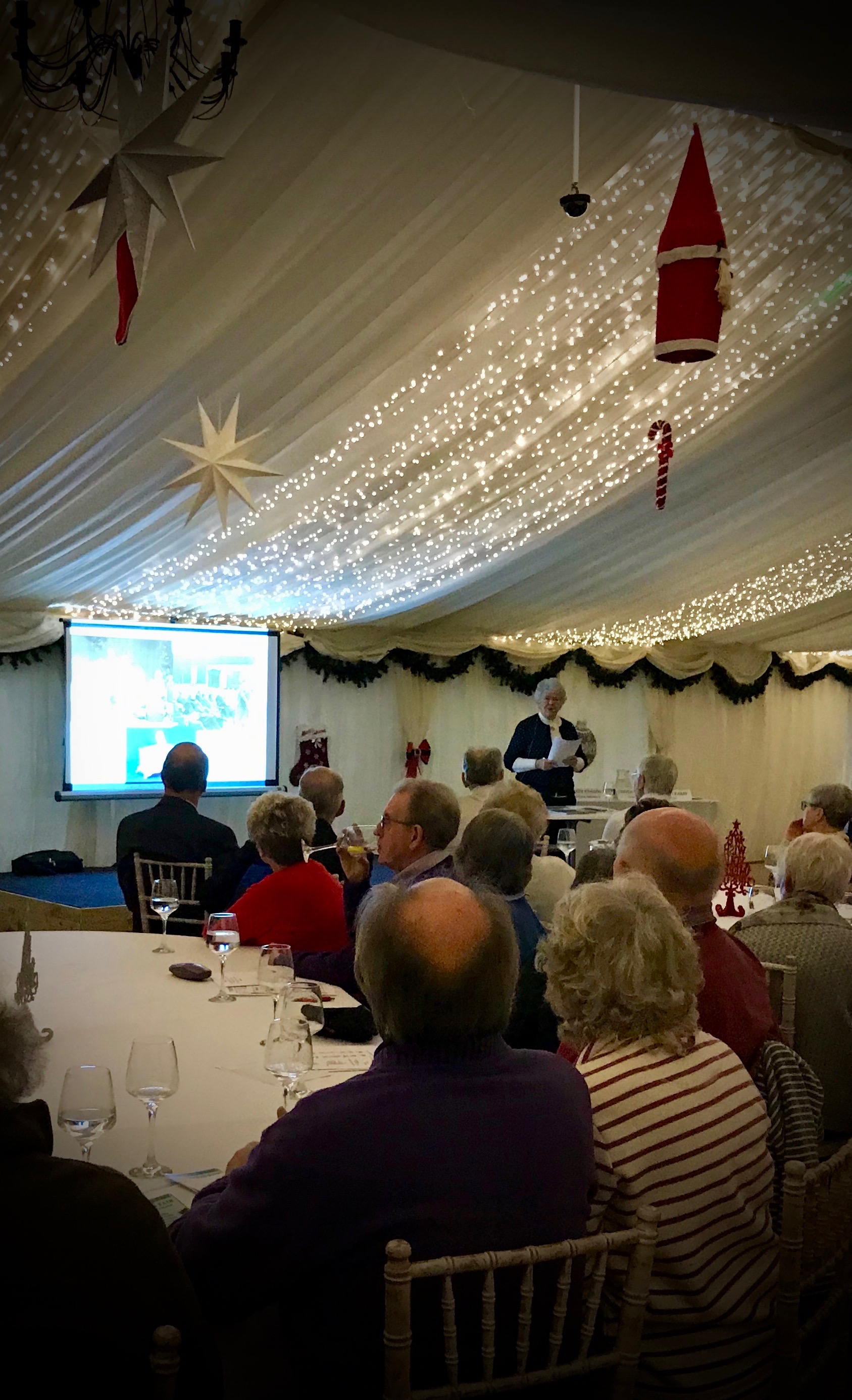
The 2018 Stewartry U3A AGM was no ordinary Annual General meeting. This year we celebrated our 10th anniversary with the most uplifting talk from Dame Barbara Kelly, Chair of the Peter Pan Moat Brae Trust ‘Moat Brae House and Garden – A Dream becoming Reality in Dumfries’.

Moat Brae was built in 1823 as a country house and family home on the edge of Dumfries. In later years JM Barrie spent many happy years playing adventure games in the gardens with the children who lived there. This was the basis of his stories about Peter Pan and Tinkerbell and all the lost children of Neverland. Following change of ownership over the years, the house became a nursing home in the early 20th century and it is in this guise it is still remembered by many locals. Dame Barbara then explained her involvement, helping to preserve the house from demolition in 2009, supporting the campaign to raise nearly £8 million to ensure its future as a National Centre for Children’s Literature.

Dame Barbara said “I was honoured to be asked to talk at this tenth anniversary event for the Stewartry U3A. I hadn’t realised just how large the local organisation was and I was astounded at the diverse range of activities taking place. It was inspirational for me to meet many U3A members and share some of their own personal tales of Moat Brae. I hope that members will be encouraged to come and see the Moat Brae Dream for themselves.”

Chris Leamy, Chair of the Stewartry U3A said “We celebrate our 10th Anniversary by knowing that retired or semi-retired people in the Stewartry need never feel bored, lonely or isolated. We now have over 300 members enjoying over 50 different kinds of activity groups which provide learning, fun and friends for everyone no longer in full time work. All this activity is conducted by members who volunteer and give their time and knowledge generously. This Anniversary is an opportunity to thank the dedicated, group leaders and committee members both past and present who have contributed to our success.”

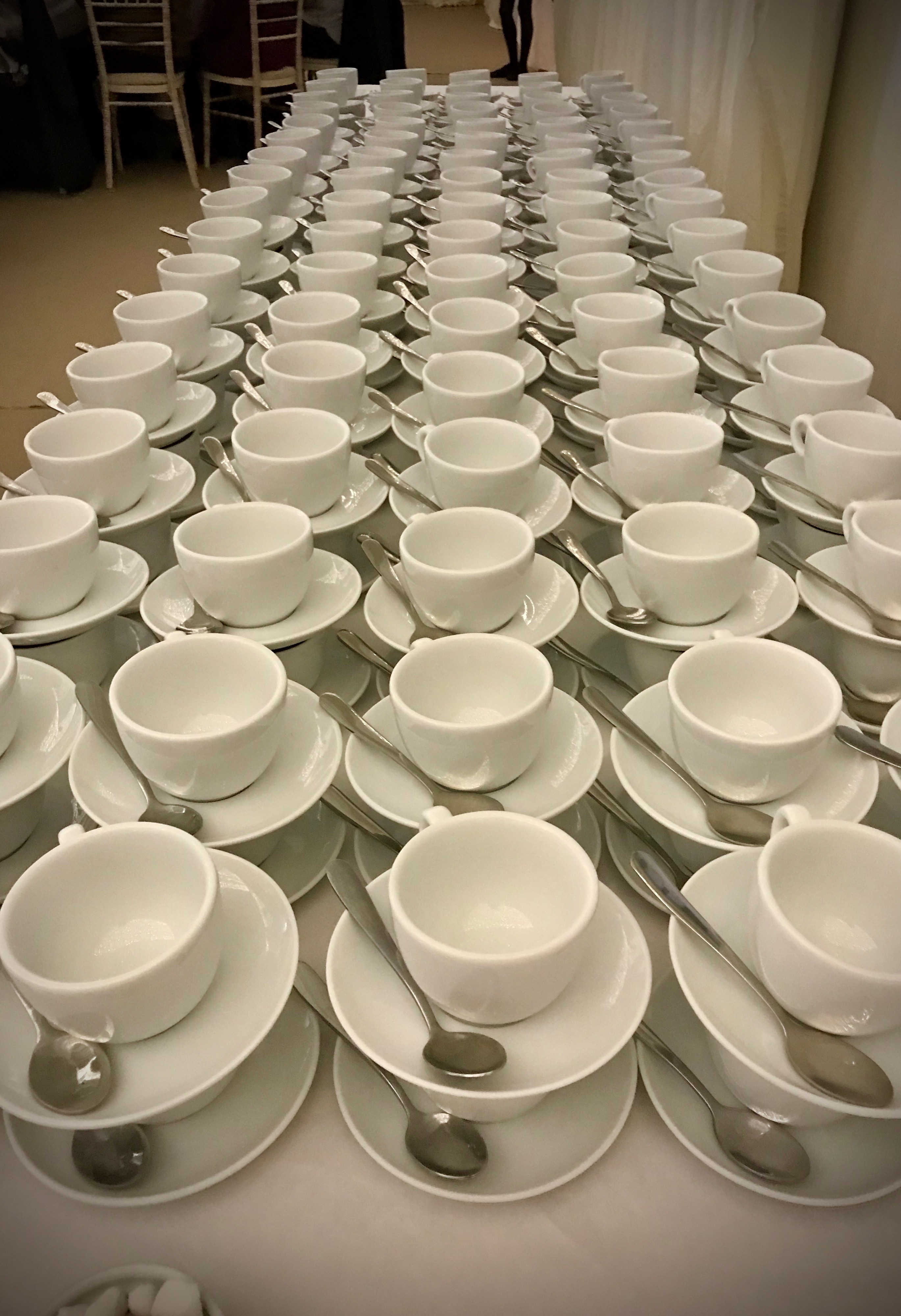
Over 100 members enjoyed a celebratory tea after Dame Barbara’s talk at the Cocoa Bean Factory in Twynholm on Tuesday 27 November 2018

The talk was part of the Stewartry U3A’s 2018-2019 monthly meeting programme. The next speaker in the series will be will be Dave Hook ‘The Journey of Dumfries and Galloway Blood Bikes’ on Tuesday 22 January 2019 at 14.00 at Castle Douglas Parish Church.