Arts and Crafts visit to Edinburgh 

Arts and Crafts visit to Edinburgh

After several weeks of meticulous planning and careful scheduling of appointments with guides, a small group of U3A members interested in the Arts and Crafts Movement arrived at Lockerbie Station to find that the 8.30am train to Edinburgh had been cancelled. After initial disbelief, Plan B was put in place and the swift arrival of taxis from Carlisle and the wonder of mobile phones, allowed arrangements to be reorganised en route so that by the time we arrived at Waverley Station our agenda was back on track.

We were in Edinburgh to look at mural paintings in the Song School of St Mary’s Episcopal Cathedral and in the erstwhile Catholic Apostolic Church (now the Mansfield Traquair Centre) which were created single handedly by Phoebe Anna Traquair between 1888 and 1901. These are major works of art on a colossal scale which link the spiritual, secular and physical realms. In the Song School the theme of the decoration is the Benedicite in which angels with trumpets and the heavenly host rub shoulders with known choirboys, clerics, workmen and notable Victorians set against recognisable landscapes and a lawn spread with flowers. The north and south walls of the Catholic Apostolic Church are decorated with panels illustrating episodes from the New and Old Testaments. The chancel arch, soaring to 22m, shows the signs of the evangelists, above them four Great Cherubim, the worship of heaven by the perfected church and a large choir. Equally spectacular is the west wall seen by the congregation on leaving church which depicts the Second Coming.

Phoebe Anna Traquair was a notable creator not only of murals but also of monumental embroideries, delicate enamelled jewellery, enamelled triptychs and caskets, illuminated manuscripts, book bindings, illustrations and painted furniture.

Although she was recognised as an influential figure in the art world before the First World War she suffered neglect until relatively recently but her star is rising again. Without doubt she is an outstanding Scottish artist whose exquisite works in an astonishing range of media are well worth seeking. To do so is to enter a world where the spiritual and the temporal meet and intermingle.

Peter Banks

U3A Arts & Crafts Group Trip to The Devil’s Porridge Museum and St Martins Church in Brampton

Arts & Crafts Group Trip April 2018

Following on the group’s discussions on the towns and cities developed along the theme of “garden cities”, a visit was made to The Devil’s Porridge Museum at Eastriggs. A talk was given by a volunteer on the history of the factory and how it was built and designed by the best in its day, to create the whole environment needed by the workers. Many thousands of young ladies were employed and housed in the most up-to-date living conditions so that the ammunition was produced for the First World War. The instigator of this was the then Prime minister, David Lloyd George. Only the best was good enough for these 30,000 young ladies, which included modern housing, cinemas, shops, canteens, and of course, a good rate of pay. This changed the way of life for many of them, as their main source of employment at the time would have been“in service” in big houses.

Many of the buildings are still in use today. There came a time of course, when the war ended and eventually they became surplus to requirement. There was a grand sale where the Government sold off these amazing places, and all those not sold were demolished. Gretna and Eastriggs and Longtown survive as towns.

The group enjoyed coffee and biscuits and a leisurely look around the many photographs of the past buildings and people of the period. We then had a drive around the village of Gretna to view what is still there now.

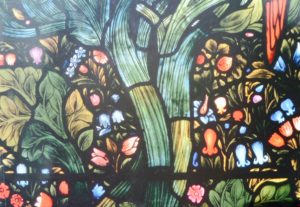
The group enjoyed a lovely lunch at the Gretna Inn, and then travelled on to Brampton to view St Martins Church. This church was designed by the Pre-Raphaelite architect Philip Webb, and contains an exquisite set of stained-glass windows designed by Edward Burne-Jones and made by Morris and Co.  Detail of window St Paul's Brampton

George Howard, who lived at nearby Naworth Castle, sponsored the building. The Morris family were family friends of George Howard and this is how the connection was made. It is a unique building, as well as being a church, which is still the centre of a thriving community. Again we had a volunteer, Mrs Lily Hopkins, who gave us a very detailed talk on the history of the church and the people involved in the building of it. Even the furniture inside the church was all designed by Philip Webb, or Morris & Co. with contributions made by other members of the Morris family.

The day had been dry but cold, and there being no heating in the church, all members of the group repaired to a local café for a warming brew and cakes.

Some members of the group were very impressed with the town of Brampton and also with the idea of visiting the church at Christmas for a service. Perhaps another trip should be planned….

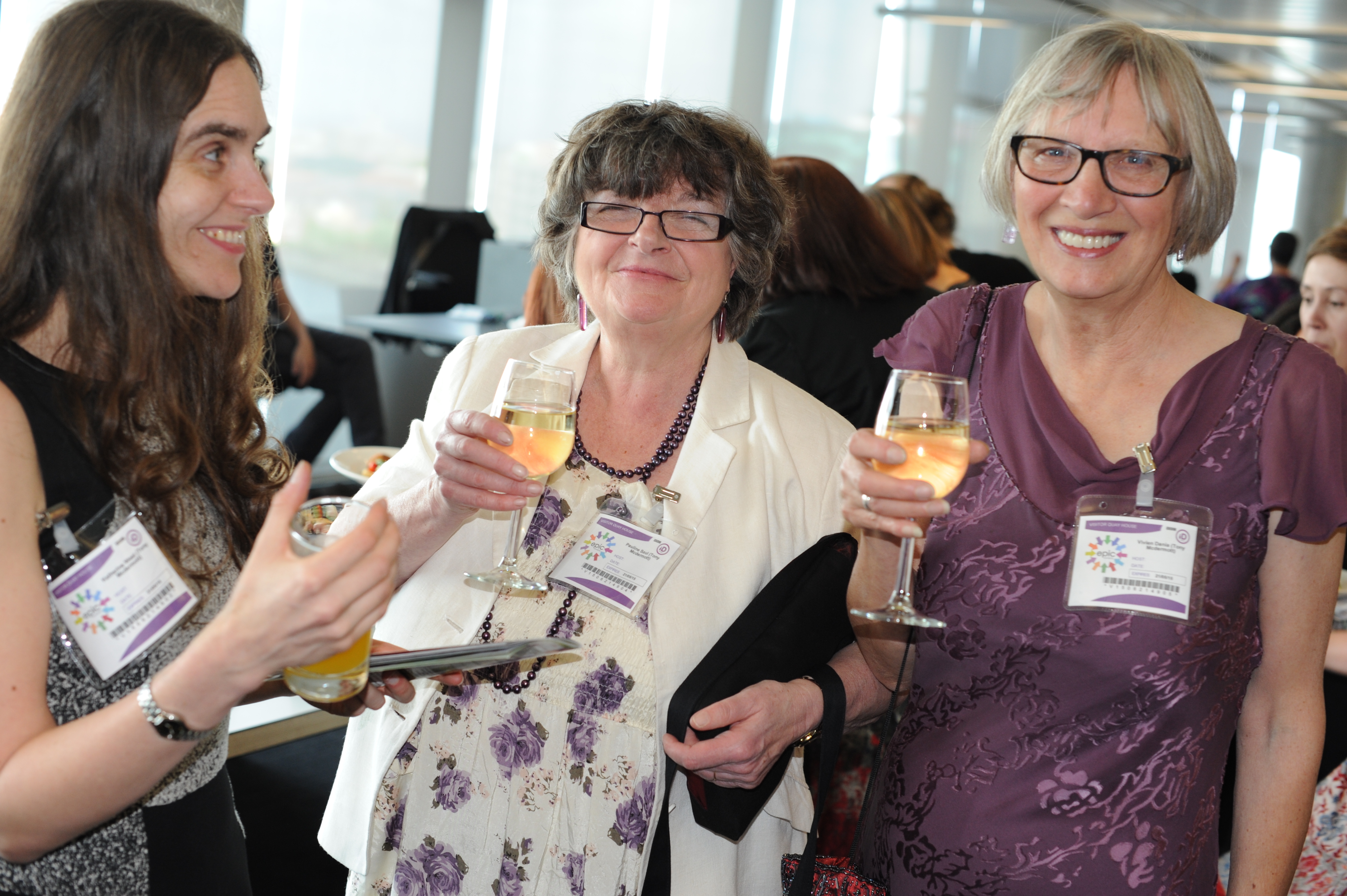
Vivien Dania & Pauline Saul of KBT Art & Crafts Trail – Winner of Epic Award 2015 for Scotland

photo 2 (1)Congratulations to Stewartry U3A members Vivien Dania and Pauline Saul who last week received the Epic Award for Scotland for their Arts and Crafts Trail which will celebrate it’s 12th year in August.

Epic Awards celebrated ‘voluntary arts achievements’ at a reception last week hosted by BBC Outreach at MediaCityUk with voluntary art groups nominated from across the UK and Southern Ireland.

Vivien, Pauline and Colin Saul won the Award for Scotland with their volunteer led arts trail which has grown to include over 100 venues with work created by over 200 participants, is a highlight of Kirkcudbright’s cultural calendar and attracts a wide audience from far and wide. U3A Members win  Award


Arts and Crafts Group Visit to Blackwell House

Thanks to the Arts and Crafts group who organised our excursion to the Lake District on a day when we left the grey skies and rain of Galloway and drove into the blue skies of Cumbria.

Blackwell Arts and Crafts House, Cumbria

Our destination was Blackwell House, the Arts and Crafts house designed by Mackay Hugh Baillie Scott for Sir Edward Holt, a leading Manchester businessman and local politician, as a holiday home where to some extent the rigid formalities of Victorian life could be relaxed.

We enjoyed both the beautiful location of this holiday home and the wonderful views.  The interior delighted us with classical arts and crafts designed rooms, artefacts and in addition a couple of art and ceramic exhibitions.  

Blackwell House view     Blackwell House Art