Gardening Group 1 visit Logan Garden 

Logan Botanic Gardens - image copyright Barry Russell

Members were greeted by a welcome notice for their July visit to these exotic Logan Botanic Gardens.

After a snack in the Potting Shed bistro the group met with Richard Baines, Curator, who accompanied members round the garden, explaining the themes of the different parts, how they had been developed and identifying many of the plants, shrubs and trees. The garden is on the same latitude as Moscow but is nevertheless able to grow tender plants due to the maritime influence.


There are many rare and unusual plants in the garden collected from around the world especially from the Far East and Southern hemisphere. Richard himself goes on plant hunting expeditions and identified plants which had been collected in Vietnam.

After lunch the group visited the area of the garden with a range of mature eucalyptus trees and shrubs from Australia, Tasmania and New Zealand. The final point of interest was the recently planted area which had been dedicated the previous week in celebration of the 50 years from 1969 when RBGE took over the gardens including a plaque identifying the curators over the years.
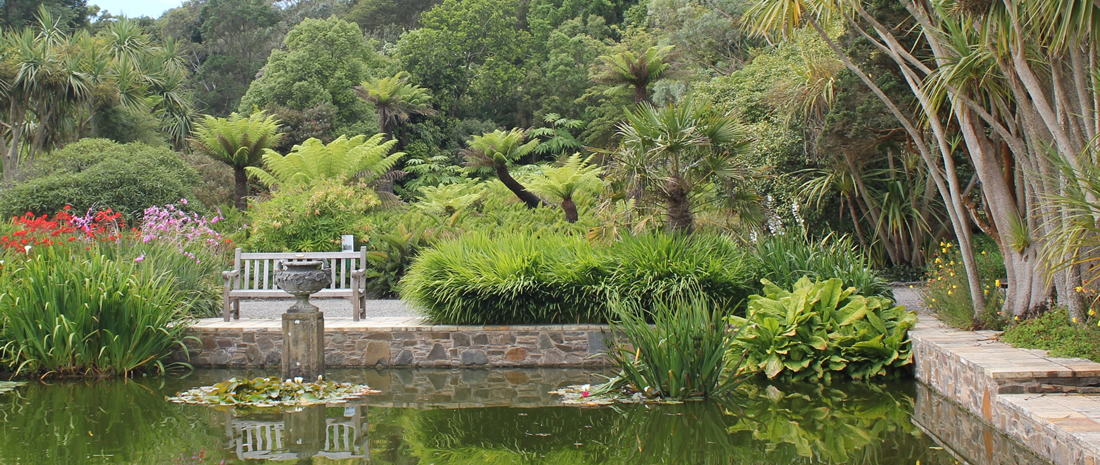
Logan Botanic Gardens - image copyright Barry Russell
Logan Botanic Gardens

Holehird Garden

Holehide Garden

Holehird Garden in the Lake District made a beautiful destination for this most enjoyable excursion.  Despite a poor weather forecast, the sun shone for most of the day.  Members enjoyed a relaxing drive along the shores of Ullswater Lake, set within the breathtaking fells, followed by the spectacular climb over the Kirkstone Pass.  Lunch was taken in Windermere and Bowness depending upon members’ choice. One member arranged to meet a cousin who she had not seen for over twenty years and had a most memorable time . After lunch the garden was visited, commencing with an informative talk by the Lakeside Horticultural Society representative, following which other members of the Society gave information and advice relating to a range of gardening matters and answered questions as members strolled around the garden.  The return journey via Grasmere, Thirlsmere, and St John’s in the Vale was followed with an evening meal at Gretna which allowed members to chat happily about their day’s experience and share ideas for their future gardening projects.

The Whithorn Story and Roundhouse

There is so much to see in Whithorn these days. The highlight was of course the Iron Age Roundhouse and the introductory video gave all the details about the site, the original Roundhouse at Black Loch of Myrton nearby, with lots of details about the archaeological dig there from local boy Graeme Cavers.

The Roundhouse itself is magnificent and we were fortunate to have a real Iron Age man in handwoven clothes, he made himself to answer questions. Also fascinating was the weaving lady who works in the house doing her own spinning and dyeing with the original Iron Age techniques.

Those from our gardening groups were also interested in the medicinal herb bed and discovered St Ninian’s weed (or wort), which is a member of the absinthe family.

The Whithorn Museum has a wonderful display of artefacts found at the many digs in the area and the Priory Museum has the oldest Christian stone in Britain.

 VISIT TO DAWYCK BOTANIC GARDEN

2016 Visit to Dawyck garden 004A group of enthusiastic gardeners visited Dawyck Botanic gardens near Peebles to enjoy the spring colours.

The journey to the garden in brilliant sunshine was on A701 past the Devil’s Beef Tub, often mentioned by James Hogg, the Ettrick Shepherd, in his books. There was a welcome cup of coffee in the very pleasant café on arrival and in which members later had lunch- even being able to sit outside in the sunshine. The plant sale area was well supported!

Thomas Gifford, one of the garden supervisors took the group round the garden which was handed over to Royal Botanic Garden Edinburgh in 1979. He described enthusiastically the work which the five staff have to carry out to maintain and develop the garden, including clearing any damage caused by the high winds which can bring down even very mature trees. When there is a heavy snow fall the staff go out with brooms to try to knock as much as they can off bushes to try to stop it breaking them or causing frost damage.

Although a couple of weeks early for some of the azaleas there were rhododendrons and other shrubs in flower, masses of bluebells below the trees and trilliums of different colours. The meconopsis were just starting to come into flower.

The garden which is more of a woodland garden or arboretum has a tree trail with many trees planted in the mid nineteenth century from seeds brought back by the plant hunters including David Douglas. There are huge specimens of sequoias, cypresses and oaks.   A wonderful garden and worth a visit!

Visit to Dawyck Gardens

U3A Members at Dawyck Gardens On Monday, 19th of October a bus load of Stewartry U3A members travelled to Dawyck Gardens to enjoy all the gardens and the lovely autumn weather could offer.

Dawyck, a regional garden of the Royal Botanic Garden Edinburgh, is a world famous arboretum with over 300 years of tree planting. In Autumn the garden foliage bursts into vivid hues of red, orange and gold and the fruit take on an almost infinite variety of shapes, colours and textures from acorns in cups and colourful crab apples to maple keys and fir cones.

Everyone’s favourites among autumn fruits are the conkers produced by the Garden’s horse chestnut trees. Overhanging Scrape Glen is a large Japanese katsura tree which in early autumn fills the air with a caramel scent as its leaves turn a pale biscuit colour.

As autumn advances the Japanese maples and spindles stand out with their colourful foliage. Birch trees can be found on the grassy plateau to the south of the Chapel and one of the best for autumn colour is the yellow birch from North America.