Local History group trip to Black Loch of Myrton

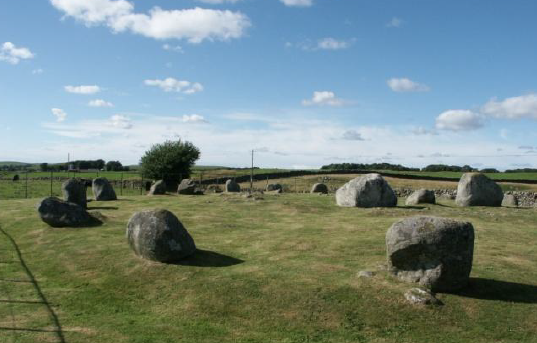
Torhouskie Stone Circle

Six members took the opportunity to visit this important excavation site (now in its 6th year) after a brief visit to Torhouskie Stone Circle (picture below) and Drumtrodden Cup and Ringed rock panels. After a lunch break at the Whithorn Trust Visitor Centre café, they proceeded in convoy with a Whithorn Trust member and three other visitors to the dig site parking area.
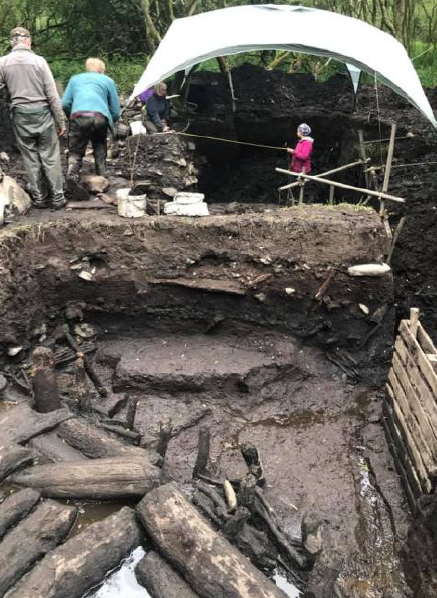
Having negotiated a challenging and muddy boarded track-way to the site they were welcomed by Dr Anne Crone, AOC Archaeology leader and Jenny Roberts, a fellow U3A group member and longstanding excavation team volunteer.

In recent seasons, it has become increasingly clear that this 2,500 year old site reveals that its inhabitants practiced wood turning, iron smelting and weaving, probably on a seasonal site basis. This season has also revealed a very substantial causeway leading to the heart of the settlement. We were shown a selection of recent finds, including worked wooden items, stone tools and a cow’s skull, from a site which has proved to be largely clean of occupation detritus.

Black Loch of Myrton

May 2018: The Whithorn Trust

Julia Muir Watt, Development Manager at the Whithorn Trust, gave a talk to the Stewartry U3A on 22 May on the archaeological work at the Black Loch of Myrton, the construction of the Roundhouse by the Whithorn Trust and the Whithorn Pilgrimage Way.

The excavations at the Black Loch have identified one of the largest Iron Age settlements in Scotland with a number of roundhouses. The boggy conditions have helped preserve much of the wooden structures including some very large timbers.

The Iron Age Roundhouse constructed by the Whithorn Trust was completed two years ago although work is still required on the interior. Local woods, alder, ash and hazel were used in the construction but the thatch had to be brought in from Eastern Europe. Much of the work was carried out by local volunteers including the laborious task of removing the bark from the timbers. The Roundhouse is already attracting many visitors and school children and has won prestigious awards.

Whithorn is the most significant pilgrimage centre in Scotland. One of the routes is from Glasgow Cathedral to Whithorn, 143 miles with evidence of Pilgrim churches along the route as well as houses for lepers. James IV came as a pilgrim to Whithorn on a number of occasions. The Trust is now working to promote the Whithorn Pilgrimage Way.