
Colin Milligan lead members of the Victorian Architecture Group together with some U3A members from the Stewartry and Dumfries U3A on a mini-bus trip to Glasgow.
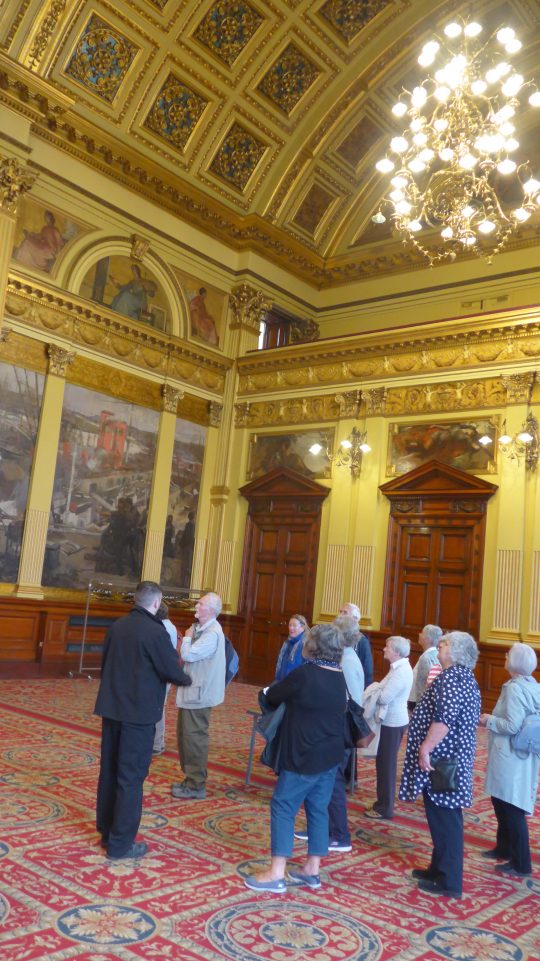
After a quick comfort break at Cairn Lodge (on the M74) we just made it in time for our guided tour of the City Chambers – a very impressive Victorian building designed by William Young of Paisley after he won a competition in 1882. The building was completed and inaugurated by Queen Victoria in 1888.
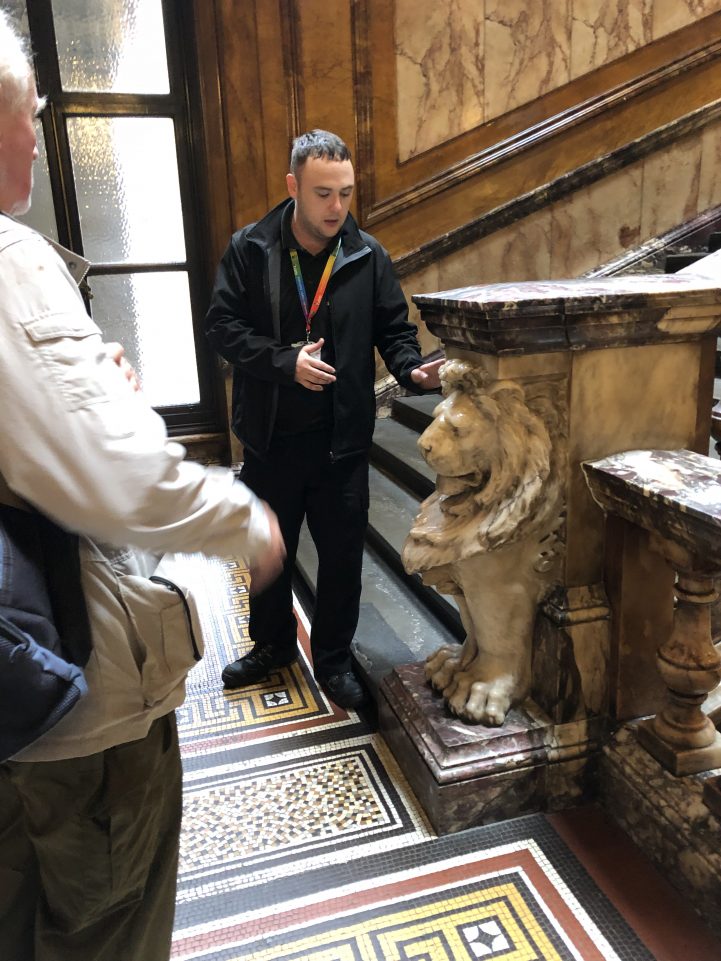
From its marble pillared entrance hall (with mosaics provided by Ludwig Oppenheimer, father of Charles) up the Carrara marble and alabaster staircase, looking up to the gold leaf ceiling and the stained glass dome, one can be lost in an earlier life of pomp and ceremony. Our guide amused us with stories of events and problems that have arisen over the life of the building and before we knew it we were back downstairs and off to lunch.


In the afternoon we had a fascinating walk around the Necropolis with one of the guides who is a volunteer and gives her time so that this unique graveyard and memorial to so many Glasgow greats can be maintained.50,000 burials have taken place at the Necropolis and most of 3,500 tombs have been constructed up to 14 feet deep, with stonewalls and brick partitions.
On the top of the Necropolis tombs were blasted out of the rockface. In 1877 the Molendinar Burn, running under the Bridge of Sighs, was culverted. This burn in which St Mungo was said to have fished for salmon is now underground on its way to the Clyde. There is so much of interest at the Necropolis that I am sure you could spend several days there reading the tombstones.
My favourite headstone is the one designed by Charles Rennie Mackintosh at an early stage in his career. (see photo).
Thanks to the very smooth and safe driving of Stephen we were back in Kirkcudbright by 7.30 p.m. after a very busy day.