

Following on the group’s discussions on the towns and cities developed along the theme of “garden cities”, a visit was made to The Devil’s Porridge Museum at Eastriggs. A talk was given by a volunteer on the history of the factory and how it was built and designed by the best in its day, to create the whole environment needed by the workers. Many thousands of young ladies were employed and housed in the most up-to-date living conditions so that the ammunition was produced for the First World War. The instigator of this was the then Prime minister, David Lloyd George. Only the best was good enough for these 30,000 young ladies, which included modern housing, cinemas, shops, canteens, and of course, a good rate of pay. This changed the way of life for many of them, as their main source of employment at the time would have been“in service” in big houses.
Many of the buildings are still in use today. There came a time of course, when the war ended and eventually they became surplus to requirement. There was a grand sale where the Government sold off these amazing places, and all those not sold were demolished. Gretna and Eastriggs and Longtown survive as towns.
The group enjoyed coffee and biscuits and a leisurely look around the many photographs of the past buildings and people of the period. We then had a drive around the village of Gretna to view what is still there now.
The group enjoyed a lovely lunch at the Gretna Inn, and then travelled on to Brampton to view St Martins Church. This church was designed by the Pre-Raphaelite architect Philip Webb, and contains an exquisite set of stained-glass windows designed by Edward Burne-Jones and made by Morris and Co. 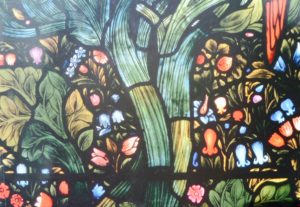
George Howard, who lived at nearby Naworth Castle, sponsored the building. The Morris family were family friends of George Howard and this is how the connection was made. It is a unique building, as well as being a church, which is still the centre of a thriving community. Again we had a volunteer, Mrs Lily Hopkins, who gave us a very detailed talk on the history of the church and the people involved in the building of it. Even the furniture inside the church was all designed by Philip Webb, or Morris & Co. with contributions made by other members of the Morris family.
The day had been dry but cold, and there being no heating in the church, all members of the group repaired to a local café for a warming brew and cakes.
Some members of the group were very impressed with the town of Brampton and also with the idea of visiting the church at Christmas for a service. Perhaps another trip should be planned….