At the March meeting of the Stewartry U3A Margo Currie gave an enthralling and enthusiastic talk on her experience in working with the deaf and hard of hearing. Margo has spent over 30 years working with the deaf including as a Teaching Fellow in British Sign Language at Durham University, a sign language interpreter at political and trade union conferences, as an examiner and is currently working with the Scottish Government.
She explained the different approaches necessary to enable people to communicate where they have been deaf from birth, people who have suddenly become deaf and those who are hard of hearing but reluctant to admit their disability. The means of communication could range from finger spelling to sign language, lip reading and amplification. She demonstrated the British Sign Language fingerspelling alphabet which involved using both hands and the single hand language as used in the USA. She also explained the difference in word order from English to deaf languages. Sign language is both visual and spatial with handshape, location and movement.
Margo demonstrated both lip reading and sign language which gave members an appreciation of how difficult it is for deaf people to communicate.
Membership of the Stewartry U3A has now risen to 233 with 47 interest groups. Future group meetings will be held in the Parish Church Hall, Queen Street, Castle Douglas and the next meeting will be held on Tuesday 28 April at 2.00pm when Simon Kennedy will give a talk entitled Community Safety. Details of the Stewartry U3A can be found on www.stewartryu3s.org.uk.
Dr. Howard Brown, Chairman of the Stewartry U3A, welcomed members to the first group meeting of the New Year. He said that in February there would be a meeting to welcome new members, two member visits were also being planned in view of the success of visits in 2014 and new members had been appointed to the committee. In view of the increasing membership and large turn-out at group meetings it had become necessary to consider larger premises for meetings and later in the year it is proposed to move to Castle Douglas parish church hall and hold meetings on the fourth Tuesday of the month.
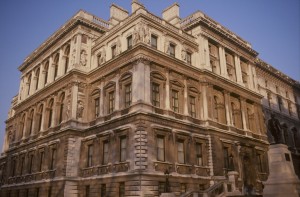
Foreign Office
Ian Anderson, a retired diplomat, who now lives in New Abbey, then gave a talk with many interesting and amusing anecdotes from his career as a diplomat in different areas of the world.
HM Diplomatic Service is a cadre of officers who serve in embassies abroad putting forward British foreign policy and interpreting the policy of foreign countries. The size of embassies and the positions within them depends on the size and importance of the countries in which they are located. Foreign policy however is formulated by the Foreign and Commonwealth Off ice with Ministers.
Ian was born in Calcutta, India, but was educated in Ireland and studied foreign languages at Queen’s University. He initially worked for the Home Office in Northern Ireland but on joining the Diplomatic Service his first posting was to Dhaka, Bangladesh. Following a few years on the East German desk he was posted to Munich where he spent five enjoyable years. He was involved in lobbying and commercial work in view of the many large German companies based there. As Munich was twinned with Edinburgh there were frequent cultural visits and a G8 summit was held in the city while he was there. Ian told of an amusing incident when the then prime minister, John Major, refused to allow his helicopter to land on a cricket square!
He was then posted to Hungary at the time when Hungary had become a member of Nato. He was fortunate while there to be able to study the Hungarian language which Ian said was especially difficult.
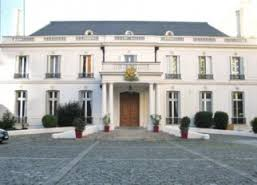
Residence in Chile
Ian’s final overseas posting was to Santiago in Chile which gave him the opportunity to travel widely in South America. He found that there were a number of links with Scotland in Chile and that their navy had been established by a Scotsman, Thomas Cochrane who is still revered there today.
Finally Ian was attached to the Ministry of Defence in Glasgow. He said that he hoped that his talk demonstrated that serving in the Diplomatic Service is more than just a succession of cocktail parties but was important in implementing British foreign policy.
The next meeting of the Stewartry U3A will be held on Thursday 19 February at 2.00pm in the Gordon Hall, Castle Douglas when Dr.Lois Sproat will give a talk on the New Zealand health system. New members will be welcome. Details of the Stewartry U3A are available on www.stewartryu3a.org.uk.
At the October meeting of the Stewartry U3A John Smith, a member of the U3A and well known local amateur photographer gave an illustrated talk on his visits to India over recent years.
He started with a video of the frightening traffic conditions in Indian towns taken from a tuk-tuk, a popular means of transport throughout India.
On one of his first visits he went to Wankaner Junction in Gujart to see the immense steam locos, many of which are now no longer in action. On a later visit he went on the Nilgiri mountain railway down from the hill station of Ooty.
John showed pictures and explained the ages and many different styles of palaces, forts and temples which he had visited on his travels ranging from early forts in Rajasthan, the Monsoon palace in Udaipur, the Jain Temple in Ranakpur and the elephant stables at Hampi built in Moghul style.
He concluded with a selection of photographs of colourful Indian festivals and wonderful portraits of Indian men, women and children.
The next meeting of the Stewartry U3A is the AGM which in view of the expected higher attendance will be held in the Fullarton Theatre, Lochside Road, Castle Douglas at 1.30pm on Wednesday 26 November 2014. Following the AGM business Professor John Stanford will give a talk entitled “You and your world are made of polymers”.
Mike Duguid, Dr David Devereux and Stewartry U3A Chairman, Dr Howard Brown at the September Monthly Meeting
At a packed meeting of the Stewartry U3A on 24 September Dr. David Devereux, former curator of the Stewartry Museum, gave a talk on John Mactaggart and the Scottish Gallovidian Encyclopedia with assistance from Mike Duguid, Chairman of the Kirkcudbright History Society who read quotations from the Encyclopedia and other sources.
John Mactaggart was born on a farm in the parish of Borgue in 1797, one of 11 children in his family. Initially he was educated at home and then at Townhead school when the family were at Torrs farm. He attended the academy in Kirkcudbright until the age of 13 depending on work on the farm, and later taught himself French and Latin. Throughout this time he developed an interest in his native countryside, local antiquities, tales and stories as well as the local Gallovidian words.
When he was 18 he attended Edinburgh University where he studied “natural” classes, but later returned to work on the farm. He went back to the University but did not attend classes as he considered them to be of little benefit! By the age of 27 he had completed his Gallovidian Encyclopedia which was published in 1824 and sold both in Scotland and in London. It received mixed reviews and caused some consternation in his native Galloway as well as in his family, his father saying that “the whole world knows he is a fool now”.
MacTaggart had developed an interest in engineering and in 1825 secured a position with the United General Gas Light Company, installing gas lights in different parts of the country. As a result of a recommendation from the engineer, John Rennie, he travelled to Canada to undertake surveying work. While there he continued to write as he had throughout his life, including a poem of 120 pages which was never published. However his second book about his time in Canada was published in 1829.
In Canada he contacted swamp fever and returned home and died at Torrs Farm in 1830.
His greatest work, the Gallovidian Encyclopedia, consists mainly of explanations of Gallovidian words and expressions but also includes his own poetry, rustic matters, and details of local customs, parishes and local worthies. It was his comments on some of these local issues and people which caused such local consternation. With varying reviews, sales by his agent in Edinburgh were slow but his London agent suggested a second print. Mactaggart decided not to go ahead having covered his publication costs by 1825.
Dr. Devereux said that it was a remarkable work being a valuable source of material about life at the time in Galloway. Mactaggart was a man of great ability who deserves to be better known.
The next meeting of the Stewartry U3A will be held at 2.00pm on Wednesday 22 October at the Gordon Hall, Castle Douglas when John Smith will talk on Travels in India. The AGM will be held the following month at 2.00pm on Wednesday 26 November in the Fullarton Theatre, Castle Douglas. The group is also arranging an outing to New Lanark to see the Great Scottish Tapestry on Monday 10 November.Details of the meetings and the outing are available on www.stewartryu3a.org.uk.
This website uses cookies to improve your experience. We'll assume you're ok with this, but you can opt-out if you wish. Cookie settingsACCEPT
Privacy & Cookies Policy
Privacy Overview
This website uses cookies to improve your experience while you navigate through the website. Out of these cookies, the cookies that are categorized as necessary are stored on your browser as they are as essential for the working of basic functionalities of the website. We also use third-party cookies that help us analyze and understand how you use this website. These cookies will be stored in your browser only with your consent. You also have the option to opt-out of these cookies. But opting out of some of these cookies may have an effect on your browsing experience.
Necessary cookies are absolutely essential for the website to function properly. This category only includes cookies that ensures basic functionalities and security features of the website. These cookies do not store any personal information.
Any cookies that may not be particularly necessary for the website to function and is used specifically to collect user personal data via analytics, ads, other embedded contents are termed as non-necessary cookies. It is mandatory to procure user consent prior to running these cookies on your website.