Edinburgh Christmas Excursion

Members enjoyed a full day in Edinburgh, despite Storm Diana during the journey north.

The delights of the capital city had much to offer, with members each enjoying their own particular passions. Some wished to experience the smells and tastes of the Christmas Market with its wide range of continental food and drink stalls. Others explored the shops seeking that special gift for a loved one.

For some members enjoyment and learning came in the form of visits to the magnificent museums for which Edinburgh is rightly famous. Taking lunch within a museum is always an experience to treasure, and at Christmas time it is very special.

This visit provided a gastronomic delight for a few who had booked a table at some of the most desirable eating establishments in Edinburgh.  Good food and good company were enjoyed whilst again memories were created.

As nightfall came, the party travelled to the Royal Botanic Gardens to enjoy the splendour of the Light and Sound display within the gardens.  The light effects created a new atmosphere with the gardens, highlighting the textures and the shapes of the magnificent trees, whilst literally showing the historic buildings in a new light.  The artwork installations where most thought provoking.

A very full day in Edinburgh, full of interesting activities.

Add some sparkle to your winter nights!

Wrap up warm, go outside and look up at the night sky. Leave the binoculars and telescopes behind initially, just use your eyes and become a little more familiar with the stars and planets. Look up until you find your curiosity is awakened by a star, a planet, a shooting star or a galaxy. At this stage, get out your optical instruments!

Scottish Dark Sky Observatory Dalmellington

This was the advice given to our U3A group by the astronomer in residence at the Scottish Dark Sky Observatory, near Dalmellington.

We should stargaze, we were informed, because it is good for our well-being: throughout the history of humankind, our ancestors have looked to the night skies for inspiration, for guidance, for navigation and for perspective.

The Galloway Forest Park has the accolade of being the first Dark Sky Park in Europe: a status granted to regions on account of low levels of light pollution. In Galloway we are privileged to have access to some of the darkest and therefore paradoxically, the brightest skies in the UK.  However the Galloway skies also have plenty of cloud, so we queried in the minibus on our way to the Observatory, what the 34 percentage cloud cover prediction given for our evening actually meant and whether we would see anything of the night sky at all?

Our queries were answered an hour later as we stood on the observatory platform, shivering with cold and gazing a bank of cloud above the horizon to which the green laser beam of our astronomer pointed. For the cloud suddenly  dissipated and there in its place, was the Red Planet, Earths nearest neighbour and probably the most studied object in the Universe,  Mars.

A quick finger on a computer screen and the giant reflecting telescope obediently moved and set  sight on our neighbouring planet. We queued to take a peep down the eyepiece and gaze in awe at the image of Mars, tinged with reddish orange colour.

Our astronomer’s green laser then pointed out Vega, the second brightest star in the Northern Celestial hemisphere. The star, twice the mass of the Sun and much studied by astrophysicists and astronomers, glinted diamond-like when viewed through the eyepiece.

“If Vega is much bigger than our sun, why does it not look much bigger when we view it through the telescope?” was one the question posed by members of our group.

“Vega is 25 light years away from our nearest star, the sun” replied our astronomer.  “That is the distance a beam of light could travel in 25 years and light can cover a distance of 300,000,000 metres in just one second.” I will leave you to do the calculation.

The green laser of the astronomer swept across the Milky way galaxy. Most of the stars here, we were told, unlike our sun are in pairs or binaries.

With the naked eye, these star systems looked like single points of light but when viewed through the telescope or a good pair of binoculars, the image often resolves and two points of light can be seen.

The green laser pointed back towards Vega and on to the Double Double, a star system named Epsilon Lyra in the constellation of Lyra, 162 light years distant).

Then came the highlight of the trip for me:  the Double Double with my naked eye looked like a point of light or just possibly two points very close to each other. When viewed through the telescope, the image resolved beautifully into four points of light. Wow!

This felt like real astronomy!

I intend to add more sparkle to my winter nights and star gaze even more. How about you?

Many thanks to the organisers of this trip to the stars and especially to Stephen Bullock our driver.

Christine Mayson

Arts and Crafts visit to Edinburgh 

Arts and Crafts visit to Edinburgh

After several weeks of meticulous planning and careful scheduling of appointments with guides, a small group of U3A members interested in the Arts and Crafts Movement arrived at Lockerbie Station to find that the 8.30am train to Edinburgh had been cancelled. After initial disbelief, Plan B was put in place and the swift arrival of taxis from Carlisle and the wonder of mobile phones, allowed arrangements to be reorganised en route so that by the time we arrived at Waverley Station our agenda was back on track.

We were in Edinburgh to look at mural paintings in the Song School of St Mary’s Episcopal Cathedral and in the erstwhile Catholic Apostolic Church (now the Mansfield Traquair Centre) which were created single handedly by Phoebe Anna Traquair between 1888 and 1901. These are major works of art on a colossal scale which link the spiritual, secular and physical realms. In the Song School the theme of the decoration is the Benedicite in which angels with trumpets and the heavenly host rub shoulders with known choirboys, clerics, workmen and notable Victorians set against recognisable landscapes and a lawn spread with flowers. The north and south walls of the Catholic Apostolic Church are decorated with panels illustrating episodes from the New and Old Testaments. The chancel arch, soaring to 22m, shows the signs of the evangelists, above them four Great Cherubim, the worship of heaven by the perfected church and a large choir. Equally spectacular is the west wall seen by the congregation on leaving church which depicts the Second Coming.

Phoebe Anna Traquair was a notable creator not only of murals but also of monumental embroideries, delicate enamelled jewellery, enamelled triptychs and caskets, illuminated manuscripts, book bindings, illustrations and painted furniture.

Although she was recognised as an influential figure in the art world before the First World War she suffered neglect until relatively recently but her star is rising again. Without doubt she is an outstanding Scottish artist whose exquisite works in an astonishing range of media are well worth seeking. To do so is to enter a world where the spiritual and the temporal meet and intermingle.

Peter Banks

Holehird Garden

Holehide Garden

Holehird Garden in the Lake District made a beautiful destination for this most enjoyable excursion.  Despite a poor weather forecast, the sun shone for most of the day.  Members enjoyed a relaxing drive along the shores of Ullswater Lake, set within the breathtaking fells, followed by the spectacular climb over the Kirkstone Pass.  Lunch was taken in Windermere and Bowness depending upon members’ choice. One member arranged to meet a cousin who she had not seen for over twenty years and had a most memorable time . After lunch the garden was visited, commencing with an informative talk by the Lakeside Horticultural Society representative, following which other members of the Society gave information and advice relating to a range of gardening matters and answered questions as members strolled around the garden.  The return journey via Grasmere, Thirlsmere, and St John’s in the Vale was followed with an evening meal at Gretna which allowed members to chat happily about their day’s experience and share ideas for their future gardening projects.

The Whithorn Story and Roundhouse

There is so much to see in Whithorn these days. The highlight was of course the Iron Age Roundhouse and the introductory video gave all the details about the site, the original Roundhouse at Black Loch of Myrton nearby, with lots of details about the archaeological dig there from local boy Graeme Cavers.

The Roundhouse itself is magnificent and we were fortunate to have a real Iron Age man in handwoven clothes, he made himself to answer questions. Also fascinating was the weaving lady who works in the house doing her own spinning and dyeing with the original Iron Age techniques.

Those from our gardening groups were also interested in the medicinal herb bed and discovered St Ninian’s weed (or wort), which is a member of the absinthe family.

The Whithorn Museum has a wonderful display of artefacts found at the many digs in the area and the Priory Museum has the oldest Christian stone in Britain.

Gardening Group 1’s best visit of the year


Our visit to the gardens at Drumlanrig House was voted one of the best  of the year – certainly the biggest garden visited by the group.

Gardening Group one meet Robbie Black, Head Gardener at Drumlanrig CastleRobbie Black, Head Gardener, took members round the extensive and varied gardens starting with a view of the formal gardens from the castle terrace. The West Parterre had roses and catmint and the East Parterre was of topiary made up of box, yew and cypress. Unfortunately the box is diseased and is to be taken out.

Gardening Group 1 visit Drumlanrig HouseIn walking through the woodland gardens, we saw one of the first Douglas Firs planted in the UK grown from seed brought back by David Douglas and what is thought to be one of the largest weeping willows in the country.
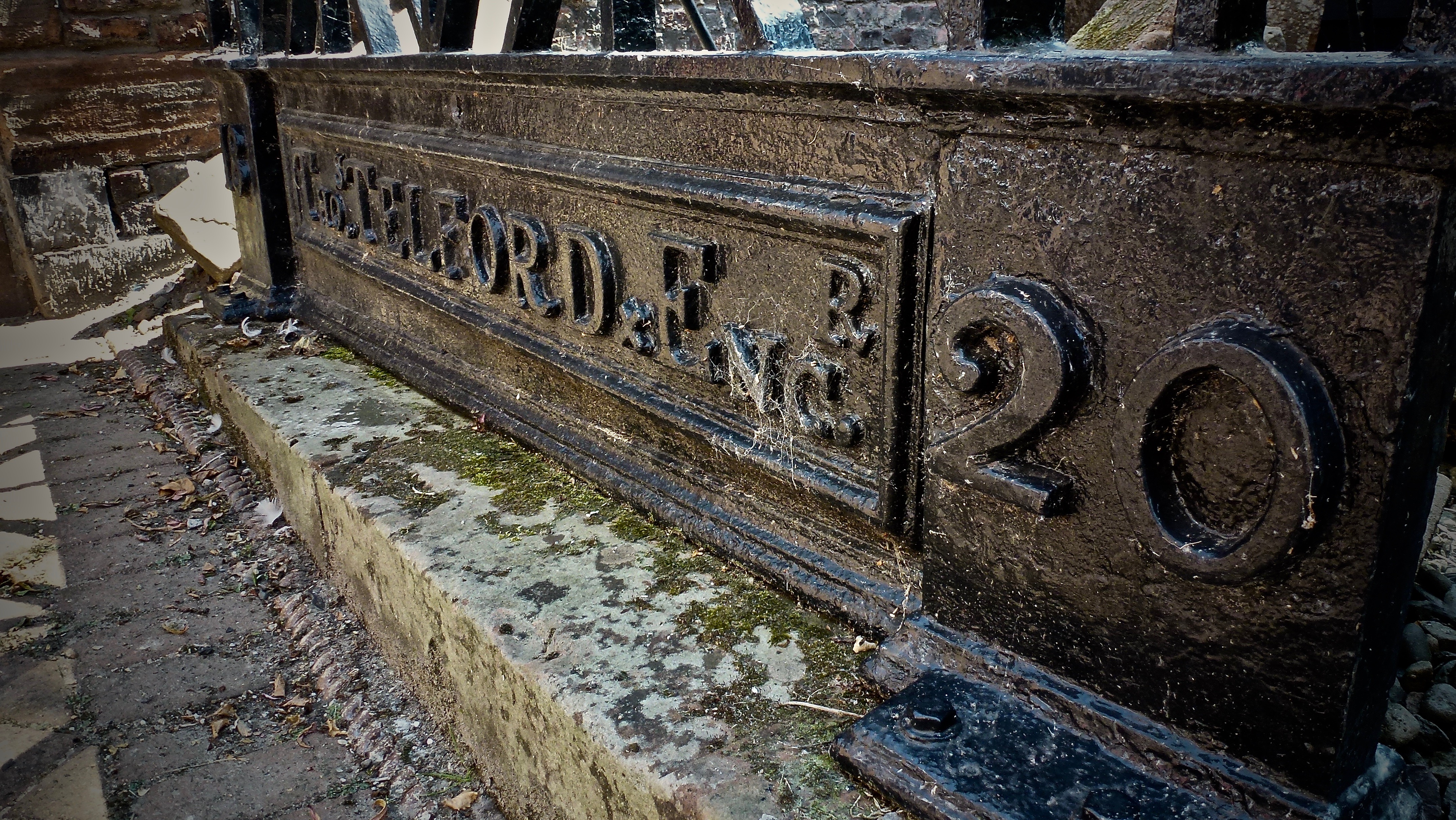

From the Victorian summerhouse we had a view of the Marr Burn and further on we visited the Heather house, constructed of local timbers with a lining of moss and heather. In the winter garden there was a collection of cornuses and viburnums.

After an hour and a half walk round the gardens we enjoyed an excellent lunch in the castle tearoom.

It was then on to visit the garden at Dabton house, the private residence of the Duke and Duchess of Buccleuch.

This was in complete contrast with a large walled garden, vegetable garden, herbaceous beds and beds of cutting flowers such as dahlias and chrysanthemums. The apple trees, some young and some very old, were hanging with apples. John Candlish, Head Gardener,explained the changes which he had made in the garden over the years. He has only one assistant to help him manage the whole garden and cut the large areas of grass!

Another successful outing.

Visit to Charles Rennie Macintosh exhibition, Kelvinhall, Glasgow

30 members visited the Charles Rennie Mackintosh Exhibition at Kelvinhall and the late watercolours owned by the Hunterian, which are kept at their Research Centre at Kelvin Hall. The day started badly because I miss-counted the people on the coach and we waited for two people who were already there but once I got my brain in gear we were fine, apart from forgetting to take a photograph of the group!

Our visit took place only a few days after the second devastating fire at the Glasgow School of Art and I could hear many comments about this as we went round the main exhibition at Kelvingrove. I could also hear many expressions of delight from our Group at the huge variety of exhibits and the amount of information there was about Mackintosh himself and the times he lived in whilst in Glasgow and later in Suffolk and London and latterly in the south of France. We felt that there was something for everyone at this exhibition from his iconic chairs to the designs of buildings that, unfortunately, never saw the light of day.

As well as the exhibition we had a private viewing of the Hunterian’s watercolours painted by Mackintosh in the last years of his life, around the village of Port Vendres in southern France. Mackintosh’s change of style from the days of his flower paintings and move back to his more architectural mood speaks volumes. Some of the Group felt that this period of his life was a happy one. I certainly hope so.

We arrived home in good time. Thank you to my husband, John, who supported me throughout the day and enabled me to have plenty of time to see the main exhibition.

Vanessa Enos

Our Local History Group dig deep into lead mining at Wanlockhead

What a wonderful day!” was the unanimous verdict on the Local History group’s visit to Wanlockhead Museum of Lead Mining in early June.

We had a lovely day with warm sunshine in the Lowther Hills, exploring the four sites in Scotland’s highest village. Coffee first with delicious homemade scones, followed by a look around the museum prior to our guided tour.

Local History Group visit Lead Mining Museum at WanlockheadHard hats on and into the Lochnell drift mine to see how the lead bearing galena rock was hewn from long narrow galleries. We went just 150 yards into the mine, a fraction of the system of galleries of this mine alone. It was the basis of the lead mining industry which was of economic significance, especially during the 18th and 19th centuries when lead was used for many purposes from water pipes to shot. Gold and silver are also present in the rock, but we did not have time for gold panning, perhaps another day…

A short walk along the valley, passed the remains of the beam engine which pumped the water into the buddles – shallow, inclined pans in which the ore was washed to separate the lead from sand, to reach the miners cottages. Original cottages have been reconfigured to show how they would have been in 1750, 1850 and 1910. The difference was marked between basic stone structures, with an earthen floor and leaky heather thatch, which the miners had to build themselves and then be charged rent for! – to cosy furnished homes with sash windows, a range and plastered walls.

Our guide, whose family worked the mine a gallery which carried their name, explained that wages were high but only paid at the end of the year when the lead was sold, so they had to live on tick buying food, tools and candles from the company store; in some years the wages would not cover the debt. Despite the hardships, many people lived to a grand old age, though those engaged in smelting often died in their 30s or 40s due to the poisonous gases produced in during processing.

Finally to the Miners’ Subscription Library, a highlight for many of us where we would have loved to browse the 3000 books, a collection recognised as of national importance. Set up in 1756 originally with 32 members it was the second such library in the country, Leadhills up the road stole a march on them by a year. Membership was a privilege; heads of house (including one woman) over the age of 21 could apply and were subject to interview to establish their suitability. Membership cost 4s a year, a considerable sum, but books were expensive and it is evident that the miners valued education highly. The library closed in 1938 and was abandoned for 40 years, though fortunately most volumes are still in good condition though some have been rebound.

Our tickets are valid until the end of the season, and some of us intend to return with family and friends, perhaps on a dreary day when we might get a more typical experience of this remote place where industrial history is brought to life.

Gardening Group 1 return to Barwhinnock House Garden

Gardening Group 1 had a second visit to the garden at Barwhinnock House on 6 May. The first visit in February was to see the carpets of snowdrops but this time the attraction was the many rhododendrons, azaleas and spring flowers. Even though Spring is late this year there was a colourful display helped by the bright sunshine.

The rhododendron RH Thomsonii, originally from the Himalayas, was in full flower with dark red blooms and the group saw a rare “Leonard Messel” magnolia which looks like stellate magnolia but has more petals in the star shaped flowers. There was also a more usual stellate magnolia close to another red flowering rhododendron.

Unfortunately no red squirrels were spotted on this visit.